
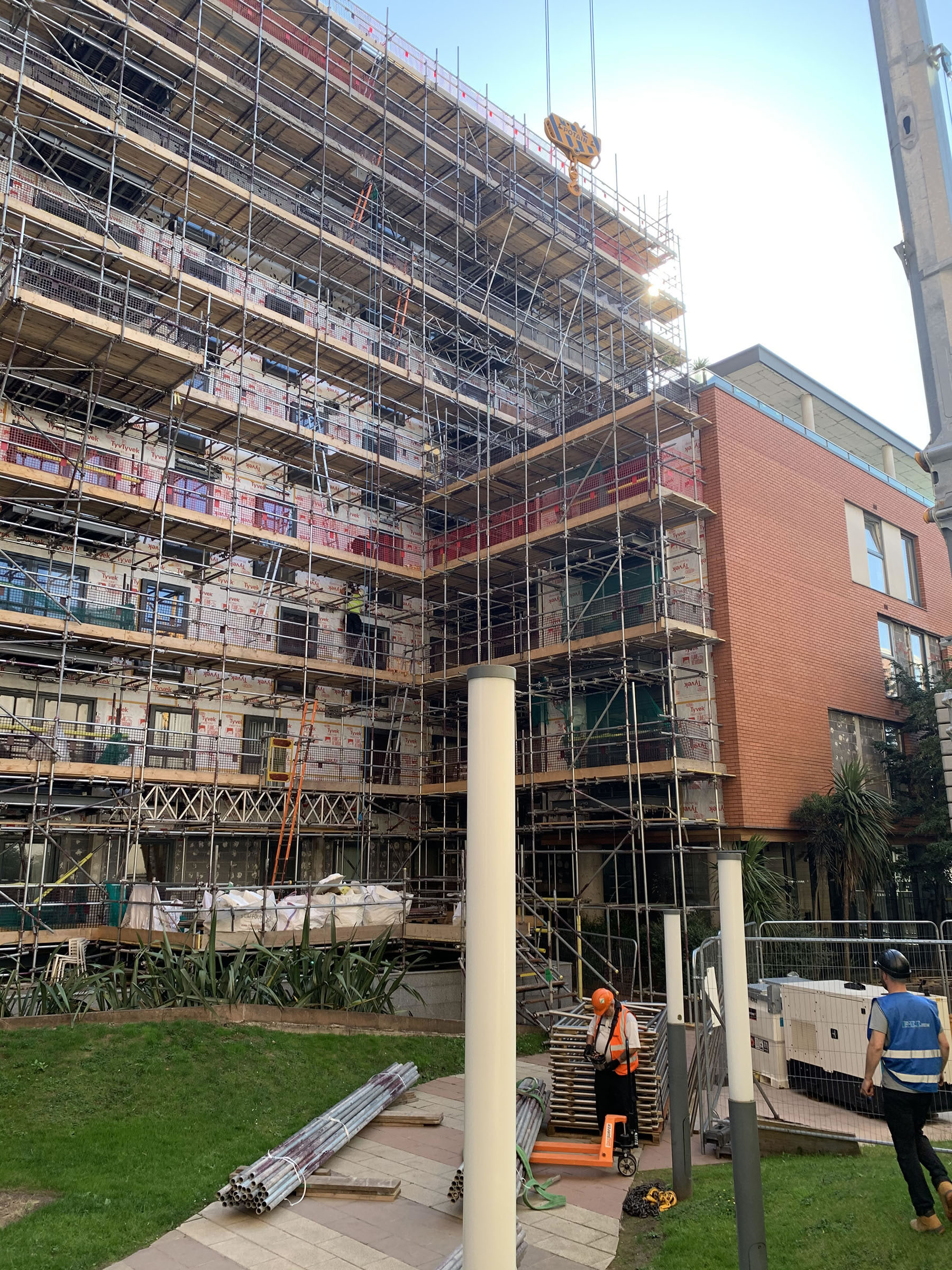
Cladding is the external, generally non-load-bearing layer fixed to a building’s primary structure to form part of its outer surface.
As part of the wider building envelope, it protects the structure from weather, supports thermal/acoustic performance, and shapes the building’s appearance. In simple terms, the facade is the building’s exterior, and cladding is one of the systems that make up the facade.
Curtain walling is a specific type of non-structural cladding system, usually framed and often glazed. Rainscreen cladding is another form of cladding: an outer layer within a double-wall build-up that sheds most water, while the inner layer provides structural support.
If you’d like to learn more, we’ll answer questions like ‘what is cladding in construction?’ and ‘how do you choose the right cladding system?’ Stay with Pops Facades for more on cladding.
What does cladding do?
In practice, cladding helps the envelope:
- Resist rain, wind and UV exposure,
- Manage moisture so any water is shed or drained away before it can penetrate the structure.
Depending on the system, it can also:
- Improve thermal insulation
- Reduce air leakage
- Support better energy efficiency and occupant comfort.
Many cladding build-ups contribute to acoustic control by limiting noise transfer from outside. Just as importantly, cladding has a major influence on a building’s visual character – it gives designers greater flexibility in material, texture, colour and form.
For building professionals, however, appearance is only one part of the equation: external wall systems also sit within the project’s fire strategy and compliance framework.
UK guidance on external walls addresses the risk of fire spread (a key concern in a post-Grenfell regulatory landscape).
Common cladding systems and materials
Cladding systems vary by performance requirements and design intent, but a few categories recur across commercial and multi-occupancy work. Here’s a breakdown:
- Rainscreen cladding: Using a rear-ventilated principle, rainscreen cladding systems consist of an outer panel, a drainage cavity, and insulation. It’s the gold standard for moisture management and thermal efficiency in remediation and new builds.
- Curtain walling: A non-structural, glazed facade system that is self-supporting and typically hung from the building’s frame (suitable for expansive glass requirements in commercial and high-rise developments).
- Metal cladding: Valued for its lightweight profile, aluminium systems, in particular, offer high fire resistance (A1/A2 ratings) and are common in modern safety upgrades.
- Stone and stone-composite: These systems offer the prestige of natural stone without the immense structural load.
By bonding a thin stone veneer (typically 3–8mm) to a lightweight aluminium honeycomb or glass-fibre backing, weight is reduced by up to 80% compared to traditional solid slabs.
For Pops Facades, the most relevant systems are those used across practical building-envelope packages, including rainscreen, stone-composite, aluminium cladding and curtain walling for both new-build and replacement projects.
How do you choose the right cladding system?
Choosing the right system requires a holistic evaluation of three factors: performance, compliance and the realities of delivery. For UK professionals, building height and use are the primary drivers, as these dictate fire safety requirements under Approved Document B.
On refurbishment projects, especially for higher-risk buildings, a detailed fire risk appraisal conducted in accordance with PAS 9980 is often mandatory.
Project context matters, too. A new build may offer greater design flexibility, whereas replacement or refurbishment works often impose constraints on access and on minimising disruption to occupants.
Professionals must also weigh lifecycle costs (considering maintenance/cleaning against the initial capital expenditure). Lastly, the system must achieve the architect’s design intent while maintaining an interface with the wider building envelope, including roofing and glazing.
Why professional installation and replacement matter
A well-specified cladding system can underperform if the installation is poor. On-site performance depends on how interfaces are resolved, the installation of cavity barriers and fixings, and the management of the sequence of works across the wider envelope.
When access and occupant disruption have to be planned just as carefully as the technical design, this becomes especially crucial. For many projects, inspection and remediation support are just as important as new installation.
That’s why a specialist partner is central – we take a full-cycle approach, managing the complexities of live-site logistics to deliver a complete solution.
Our methods integrate our in-house expertise with specialist design input and compliant, non-combustible materials. We also offer fire-engineer-supported inspections and detailed reporting to make sure every project meets the highest safety standards.
Interested in cladding installation and replacement? Speak to Pops Facades about compliant, high-performance solutions for new-build and occupied refurbishment projects.
